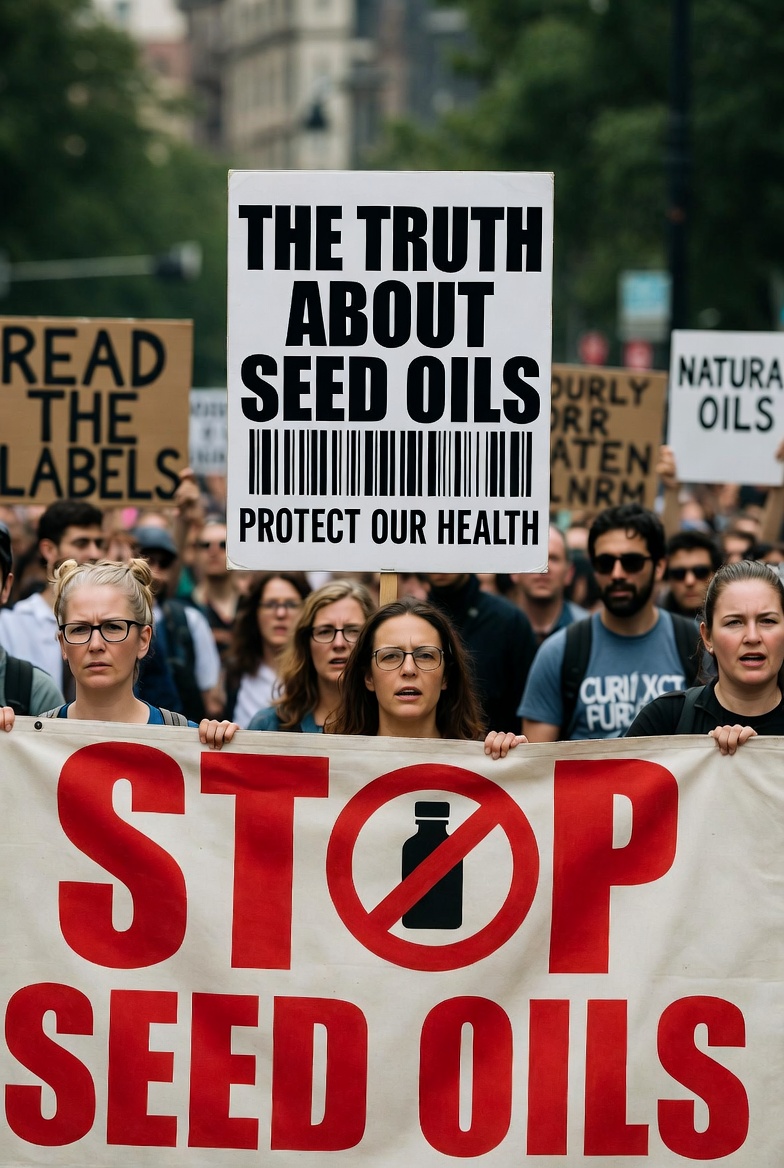
Seed Oils and Their Hidden Dangers?
A science-based position on dietary oils, inflammation, and the modern food system
One thing became very clear. Concern about seed oils has moved far beyond niche online discussions and into mainstream consumer awareness. Industry data presented at the session showed it is now one of the fastest growing topics in food related searches and consumer inquiries.
But the real driver is not just fatty acid chemistry. It reflects a broader shift toward conscious consumption. Consumers increasingly want to understand how ingredients are produced, how foods are processed, and what role industrial food systems play in modern health trends.
The discussion also emphasized that the topic is far more nuanced than social media often suggests. Different oils behave differently depending on their fatty acid profile, how they are processed, how they are stored, and how they are used in cooking.
In many ways, the seed oil conversation has become a proxy for a larger debate about ultra processed foods, transparency, and how modern diets have evolved.
And this education track is what inspired me to write this blog.
Executive Summary
Seed oils have become one of the most polarized topics in modern nutrition. On one side, mechanistic arguments and viral narratives warn that industrial vegetable oils are driving the chronic disease epidemic. On the other, clinical researchers point to decades of controlled human trials showing no inflammatory harm from linoleic acid at typical dietary intakes. Both camps claim the science is settled. Neither is entirely right.
This document presents a balanced, evidence-based position. The core thesis is straightforward: seed oils are not inherently toxic, but they are not unconditionally safe, either. Context determines their impact. The variables that matter most are dose, thermal exposure, processing quality, reuse history, and what they replace in the diet. When consumed in reasonable quantities, cooked at moderate temperatures with fresh oil, and evaluated against the alternative—typically saturated fat—linoleic acid–rich seed oils consistently perform as well as or better than their comparators in controlled human trials.
The legitimate concern lies not in the oil itself, but in how the modern food system uses it: at industrial scale, under repeated high-heat conditions, as the dominant fat in ultra-processed foods that now constitute more than half of American caloric intake. That is a systems problem, not a biochemistry problem. The conversation needs to shift from “are seed oils bad?” to “in what dose, under what conditions, compared to what alternative, and in what dietary pattern?”
What follows is a structured walk through the cultural context, the biochemistry, the clinical evidence, and the practical framework that makes this nuanced position actionable.
The Cultural Landscape
A Conversation That Is Evolving, Not Fading
The conversation around seed oils is not fading. It is evolving. Interest in the broader “seed oil” category is up nearly sixteen percent year over year, representing an additional 2.5 million searches. That is not the signature of a dying controversy. It signals sustained cultural relevance. But what is more revealing is how that attention is shifting.
Consumers are no longer engaging with seed oils as a single monolithic concept. They are moving toward ingredient-level exploration. Black seed oil, now the largest related item within the category, has climbed more than thirty percent year over year. Pumpkin seed oil has surged even more dramatically, accelerating over one hundred percent. These are meaningful absolute lifts, not fringe fluctuations. The energy in the category is flowing into specificity.
At the same time, search behavior is crossing over into food and culinary contexts. Terms like “oil” are up more than thirty percent year over year, and pumpkin-related searches are rising nearly eighty percent. That pairing signals something important: seed oils are not just being debated. They are being cooked with, researched as ingredients, and integrated into everyday use cases. Curiosity is no longer confined to health skepticism. It is expanding into application.
Platform dynamics reinforce this shift. Discovery remains predominantly Google-led, accounting for roughly two-thirds of search volume, indicating informational intent and research behavior. TikTok contributes about a quarter, amplifying narratives and moments, but the data do not point to a single brand takeover driving the category. Brand spikes appear episodic and often based on small baselines. The movement is category-wide and usage-driven.
Taken together, the signal is clear. The seed oil conversation is not simply a backlash cycle. It is fragmenting, maturing, and becoming more ingredient-specific. Consumers are asking different questions now—not just “are seed oils bad?” but “which oil?” “for what purpose?” and “based on what evidence?” That is precisely where the science becomes essential.
Why Seed Oils Became the Lightning Rod
We are not debating seed oils in a vacuum. We are debating them in the context of a country where roughly two-thirds of adults have at least one chronic disease and about forty percent have multiple. More than half of total caloric intake comes from ultra-processed foods, largely defined by refined flours, refined sugars, and refined oils. About one in five calories consumed in the United States comes specifically from vegetable oils. That scale alone guarantees that oils will become a focal point of scrutiny.
What is happening culturally is not random. Carbohydrates and sugar have been under the microscope for decades. Oils are the newest major macronutrient category to enter consumer consciousness at scale. Consumers are increasingly reading labels, questioning processing methods, and demanding transparency. Brands and retailers are responding—sometimes by reformulating, sometimes by adding certifications, and sometimes simply by highlighting “seed oil free” messaging on packaging.
This trend is part of a broader movement toward conscious consumption. Consumers want to understand what goes into their bodies and how it is produced. They are suspicious of industrial extraction, global supply chains, and ultra-processed ingredients. Seed oils sit at the intersection of all three: industrial processing, high prevalence in packaged foods, and association with modern chronic disease patterns.
At the same time, the debate is often flattened into absolutes—“seed oils are toxic” versus “seed oils are perfectly safe.” The reality is more nuanced. Some seed oils are higher in linoleic acid than others. High-oleic variants behave differently than conventional ones. Repeated high-heat frying creates degradation products. Dose matters. Processing matters. Substitution matters. Context matters.
The reason seed oils have become such a lightning rod is not simply their chemistry. It is their scale. Soybean oil consumption has increased dramatically over the past century. Vegetable oils now represent roughly twenty percent of caloric intake. That makes them symbolically powerful. When chronic disease is widespread and food is seen as the “lead domino,” the largest, newest, most industrial ingredient becomes an obvious suspect. But scale and suspicion are not the same as proof.
The Biochemistry of Dietary Fats
Why Structure Matters
Dietary fats are often discussed as though they are nutritionally interchangeable. Biochemically, they are not. Fatty acids differ in carbon chain length, degree of saturation, double bond number and position, geometric configuration, and oxidative stability. These structural features determine how fats integrate into phospholipid membranes, influence lipid raft architecture, interact with toll-like receptors, and regulate transcription factors such as NF-κB and PPARs. They shape lipoprotein metabolism, endothelial function, eicosanoid synthesis, and ultimately inflammatory tone.
From this biochemical framework, it is understandable why certain fats generate controversy. Polyunsaturated fatty acids, particularly linoleic acid–rich seed oils, contain multiple double bonds that make them more susceptible to oxidation under certain conditions. Linoleic acid participates in the omega-6 pathway and can, through regulated enzymatic steps, contribute to arachidonic acid pools. Arachidonic acid serves as a substrate for cyclooxygenase and lipoxygenase enzymes, producing eicosanoids involved in inflammatory signaling. In industrial settings, vegetable oils are refined and sometimes exposed to high heat, which can generate lipid oxidation products.
Taken together, these biochemical, enzymatic, industrial, and evolutionary considerations form the basis of a coherent argument that linoleic acid–rich oils may promote oxidative stress, alter membrane composition, and shift inflammatory balance over time. The concern is not limited to short-term cytokine elevations but extends to long-term membrane remodeling, mitochondrial vulnerability, and cumulative oxidative load.
A Closer Look at Each Fat Class
Saturated Fatty Acids
Saturated fatty acids contain no double bonds. Their carbon chains are fully hydrogenated, typically ranging from twelve to eighteen carbons in common dietary sources. Because they lack double bonds, these molecules are linear and pack tightly within phospholipid membranes, reducing membrane fluidity and increasing lipid raft rigidity, which can influence receptor signaling. They are not direct precursors to eicosanoids and do not enter cyclooxygenase or lipoxygenase pathways. However, in certain metabolic contexts—particularly insulin resistance—they may indirectly amplify inflammatory signaling through TLR4 activation and increased ceramide production. Most saturated fatty acids raise LDL cholesterol and ApoB, although stearic acid is relatively neutral. They are highly stable and resistant to oxidation. Common sources include butter, cheese, red meat, coconut oil, and palm oil.
Monounsaturated Fatty Acids
Monounsaturated fatty acids contain a single double bond, typically in the cis configuration. Oleic acid is the dominant example. That one double bond introduces a structural bend, preventing tight packing and increasing membrane fluidity relative to saturated fats, which improves lipid raft dynamics and can indirectly dampen inflammatory signaling. They are not substrates for eicosanoid production. Oxidatively, they are moderately stable—more resistant than polyunsaturated fats but less so than saturated fats. When they replace saturated fat in the diet, LDL cholesterol typically decreases and HDL is maintained or increased. Extra virgin olive oil, avocado, and almonds are common sources.
Omega-6 Polyunsaturated Fatty Acids
Omega-6 fatty acids contain two or more double bonds, with the first double bond located at the sixth carbon from the methyl end. Linoleic acid and arachidonic acid are the principal members. These fats increase membrane fluidity and are incorporated into phospholipids, where they serve as substrates for signaling molecules.
Linoleic acid undergoes conversion through a shared enzymatic pathway beginning with delta-6 desaturase—the rate-limiting step that it shares with alpha-linolenic acid, the omega-3 precursor. Linoleic acid converts to gamma-linolenic acid, then to dihomo-gamma-linolenic acid, and eventually to arachidonic acid via delta-5 desaturase. Arachidonic acid can then be released from membranes by phospholipase A2 and converted by cyclooxygenase enzymes into series-2 prostaglandins and thromboxanes, or by lipoxygenase into series-4 leukotrienes.
Importantly, substrate availability alone does not determine inflammatory output. Enzyme expression, redox state, and cytokine signaling regulate how much arachidonic acid is actually released and converted. Conversion of dietary linoleic acid to arachidonic acid in humans is relatively low under typical conditions—less than one percent, with no consistent rise in circulating arachidonic acid observed in trials. Additionally, dihomo-gamma-linolenic acid can generate series-1 prostaglandins, which are less inflammatory. While omega-6 fats are more susceptible to oxidation because of their multiple double bonds, controlled human trials consistently show that higher linoleic acid intake does not increase circulating CRP, IL-6, TNF-α, or MCP-1 when compared with saturated or monounsaturated fats. When replacing saturated fat, omega-6 fats lower LDL and ApoB. Common dietary sources include soybean, corn, safflower, and sunflower oils.
Omega-3 Polyunsaturated Fatty Acids
Omega-3 polyunsaturated fatty acids contain multiple double bonds with the first at the third carbon from the methyl end. Alpha-linolenic acid, eicosapentaenoic acid (EPA), and docosahexaenoic acid (DHA) are the key members. Alpha-linolenic acid competes with linoleic acid for delta-6 desaturase, though conversion to EPA and DHA in humans is inefficient. Direct dietary intake of EPA and DHA bypasses these rate-limiting steps.
Once incorporated into membranes, EPA competes with arachidonic acid for cyclooxygenase and lipoxygenase enzymes, generating series-3 prostaglandins and series-5 leukotrienes, which are less inflammatory than their omega-6 counterparts. More importantly, EPA and DHA are precursors to specialized pro-resolving mediators including resolvins, protectins, and maresins—molecules that actively terminate inflammation by reducing neutrophil infiltration and enhancing macrophage-mediated clearance of cellular debris. Clinically, they lower triglycerides and exert net anti-inflammatory and pro-resolving effects. Primary sources include fatty fish, fish oil, flaxseed, and chia seeds.
Industrial Trans Fatty Acids
Industrial trans fatty acids contain at least one double bond in the trans configuration, which linearizes the molecule and makes it resemble saturated fat structurally while retaining unsaturation chemically. These fats incorporate abnormally into membranes, disrupt lipid raft function, and impair receptor signaling. They are not substrates for eicosanoid production, yet they increase NF-κB activation, endothelial adhesion molecule expression, CRP, IL-6, and TNF-α. From a lipoprotein perspective, they raise LDL, lower HDL, and increase small dense LDL. Their inflammatory potential is indirect but potent, mediated through membrane distortion and oxidative stress. Sources historically included partially hydrogenated oils and certain processed baked goods.
Shared Enzymatic Principles
Across all fat classes, several biochemical principles determine clinical impact. The number of double bonds governs membrane fluidity and oxidation susceptibility. The position of the first double bond determines omega classification and the family of lipid mediators produced. Cis versus trans geometry dictates molecular shape and membrane behavior. Chain length influences absorption and lipoprotein packaging. Most critically, the substitution effect determines real-world impact—meaning what nutrient a given fat replaces in the diet.
At the enzymatic level, delta-6 desaturase serves as the principal bottleneck shared by omega-6 and omega-3 pathways. Phospholipase A2 controls the release of arachidonic acid or EPA from membranes during inflammatory signaling. Cyclooxygenase and lipoxygenase enzyme expression often dictate eicosanoid output more than dietary substrate concentration. Production of specialized pro-resolving mediators requires adequate incorporation of EPA and DHA into membrane phospholipids. Oxidative stress amplifies inflammatory signaling independent of substrate abundance.
What the Clinical Evidence Actually Shows
From Hypothesis to Human Data
The theoretical case against seed oils rests largely on biochemical extrapolation and ecological correlation. The clinical case in humans rests on measured biomarkers and hard outcomes. When linoleic acid–rich oils are examined in controlled conditions, the anticipated pro-inflammatory signal does not appear in human data. Across randomized trials and meta-analyses, increasing linoleic acid intake does not raise systemic inflammatory biomarkers compared with saturated or monounsaturated fats, and often lowers LDL cholesterol when replacing saturated fat. The enzymatic conversion of linoleic acid to arachidonic acid in humans is tightly regulated and limited.
This distinction is critical. The conversation must shift from hypothesis to evidence: what happens in vivo, in controlled conditions, when these oils replace other fats in real diets?
Direct Human Trial Evidence
Randomized Controlled Trials & Meta-AnalysesA systematic review and meta-analysis of thirty randomized controlled trials (four to twenty-four weeks) found that higher linoleic acid intake did not increase CRP, IL-6, TNF-α, or MCP-1, with effect sizes near zero. — Petersen et al., 2024
A separate systematic review of thirty-six RCTs found no causal link between increased linoleic acid intake and higher inflammatory markers or oxidative stress. — Poli et al., 2023; Grytten et al., 2025
In a double-blind crossover trial, fifteen to twenty grams per day of linoleic acid (safflower oil) versus three to four grams per day of EPA/DHA in adults with abdominal obesity showed no difference between omega-6 and omega-3 supplementation in circulating inflammatory markers. Linoleic acid actually lowered TNF, MCP-1, MIP-1β, and RANTES from baseline. — Grytten et al., 2025
In adults with untreated hypercholesterolemia, eight weeks of a diet rich in cottonseed oil (high linoleic acid) versus olive oil (high oleic acid) showed no differences in CRP, IL-6, TNF-α, IL-1β, or coagulation markers. — Prater et al., 2023
A separate four-week RCT comparing cottonseed oil with olive oil in healthy adults found similar global metabolic profiles and no rise in arachidonic acid or downstream pro-inflammatory eicosanoids with cottonseed oil. — Cooper et al., 2025
Observational and Mechanistic Context
Observational data generally show an inverse association between circulating linoleic acid levels and inflammatory markers such as CRP and IL-1β—meaning higher linoleic acid is associated with lower inflammation, not higher.
One hypothesis paper has argued that linoleic acid raises oxidized LDL and contributes to coronary heart disease, but this position is largely mechanistic and observational, and it conflicts with the broader weight of epidemiological and trial-level evidence.
Where the Real Risk Lives
The Heat Problem
The concern about seed oils at high heat is rooted in chemistry, but it is often oversimplified in public discussion. Seed oils such as soybean, corn, sunflower, and safflower oil are rich in polyunsaturated fatty acids, primarily linoleic acid. Polyunsaturated fats contain multiple double bonds—reactive sites that make the molecule more vulnerable to oxidation when exposed to heat, oxygen, and time.
When a polyunsaturated oil is heated to high temperatures, especially in the presence of air, lipid peroxidation can occur through a chain-reaction process. Heat initiates the formation of lipid radicals. These radicals react with oxygen to form lipid peroxides. Lipid peroxides then decompose into secondary breakdown products, including reactive aldehydes such as 4-hydroxynonenal (4-HNE) and malondialdehyde (MDA). Under laboratory conditions and in heavily degraded oils, these aldehydes can modify proteins, damage lipoproteins, and activate redox-sensitive inflammatory pathways such as NF-κB.
The effect is amplified when oil is repeatedly heated and reused, as occurs in commercial deep frying. Each heating cycle increases total polar compounds and oxidation byproducts. High surface-area exposure to oxygen in fryers further accelerates degradation. This is where the legitimate risk lies: repeated high-temperature industrial frying, not occasional household sautéing.
The Smoke Point Misconception
Smoke point is the temperature at which an oil begins to visibly smoke due to the volatilization of free fatty acids and minor compounds. It is a culinary performance metric, not a direct measure of oxidative damage or toxicity. Oxidation can begin below the smoke point, and significant degradation can occur without dramatic smoke. Conversely, an oil with a high smoke point is not automatically resistant to oxidation.
Refined oils often have higher smoke points because impurities and free fatty acids have been removed. Extra virgin oils may have lower smoke points but contain natural antioxidants such as polyphenols that slow oxidative reactions. Therefore, a higher smoke point does not necessarily mean greater biological stability. What truly determines degradation is the combination of temperature, duration, oxygen exposure, and reuse. Time plus heat plus air is more important than smoke point alone.
In practical terms, brief cooking at moderate household temperatures with fresh oil produces far fewer oxidation products than repeated deep frying at high heat. Human feeding trials using seed oils within normal culinary contexts do not show increases in systemic inflammatory biomarkers compared with other fats. The critical distinction is this: seed oils can become unhealthy when thermally abused, particularly in industrial deep-frying environments. But smoke point by itself is an incomplete and often misleading proxy for safety.
Dose, Scale, and the Toxicology Principle
One of the foundational principles in toxicology is that the dose makes the poison. Virtually any biologically active compound can become harmful when exposure exceeds physiological tolerance. Water, oxygen, and iron are all essential to life, yet toxic at extremes. Fatty acids are no different. Linoleic acid, oleic acid, and saturated fats each serve structural and signaling roles in human biology. The meaningful question is not whether a fatty acid can oxidize under certain conditions, but whether the amount consumed within a real dietary pattern produces measurable harm. In controlled human feeding trials, moderate intake of linoleic acid–rich oils does not increase systemic inflammatory biomarkers when compared with other fats, particularly when replacing saturated fat.
Total Polar Materials: How Europe Measures Real Risk
This is why many European countries regulate frying oil quality using total polar materials, or TPM. TPM measures the percentage of degraded compounds in used oil, including oxidized triglycerides and polymerized breakdown products. In much of the European Union, frying oil must be discarded when TPM reaches twenty-four to twenty-five percent. This threshold is based on food safety standards designed to limit consumer exposure to degraded lipid compounds.
The presence of TPM regulation underscores an important point: the risk is not inherent to the fresh oil itself, but to cumulative degradation under repeated high-heat conditions. Processing—including solvent extraction, refining, bleaching, and deodorizing—removes impurities and achieves improved consistency, but processing alone does not render an oil toxic. How it is stored, heated, and reused plays a far larger role in determining oxidative stability.
A Framework for Moving Forward
The Better Question
Instead of asking whether seed oils are inherently poisonous, the better framing is: in what dose, in what context, under what processing and cooking conditions, and compared to what alternative? That is the question that moves the discussion forward and that separates evidence-based reasoning from sloganeering.
The seed oil conversation is not a backlash that will quietly fade. It is fragmenting, maturing, and becoming more ingredient-specific. Consumers are asking more sophisticated questions, and they deserve more sophisticated answers. The science supports neither blanket condemnation nor uncritical endorsement. It supports nuance—and nuance, when communicated well, is what builds lasting trust.
Five Principles for a Balanced Position
First, evaluate oils by their full context, not their fatty acid profile alone. An oil’s health impact depends on dose, cooking method, reuse history, processing quality, and what it replaces in the diet.
Second, recognize that mechanistic plausibility and clinical proof are different standards of evidence. The theoretical case against linoleic acid is coherent. The clinical case in humans does not support it at typical dietary intakes.
Third, take thermal abuse seriously. The danger from seed oils is real when they are subjected to prolonged, repeated high-heat exposure in industrial frying environments. Brief household cooking with fresh oil is a fundamentally different exposure.
Fourth, prioritize the substitution effect. In nearly every controlled trial, the health outcome of a fat depends on what it replaces. Replacing saturated fat with polyunsaturated fat consistently lowers LDL cholesterol and ApoB without increasing inflammatory biomarkers.
Fifth, advocate for better systems, not just better labels. TPM regulation, frying oil quality standards, and reduced reliance on ultra-processed foods address the root of the problem more effectively than eliminating a single ingredient.
References
- Petersen, K., Maki, K., Calder, P., Belury, M., Messina, M., Kirkpatrick, C., & Harris, W. (2024). Perspective on the health effects of unsaturated fatty acids and commonly consumed plant oils high in unsaturated fat. The British Journal of Nutrition, 132, 1039–1050.
- Poli, A., Agostoni, C., & Visioli, F. (2023). Dietary Fatty Acids and Inflammation: Focus on the n-6 Series. International Journal of Molecular Sciences, 24.
- Cooper, G., Bhattarai, P., Sather, B., Bailey, M., Chamberlin, M., Miles, M., & Bothner, B. (2025). Dietary Intervention with Cottonseed and Olive Oil Differentially Affect the Circulating Lipidome and Immunoregulatory Compounds. Metabolites, 15.
- Grytten, E., Laupsa-Borge, J., Cetin, K., et al. (2025). Inflammatory markers after supplementation with marine n-3 or plant n-6 PUFAs: A randomized double-blind crossover study. Journal of Lipid Research, 66.
- DiNicolantonio, J., & O’Keefe, J. (2018). Omega-6 vegetable oils as a driver of coronary heart disease: the oxidized linoleic acid hypothesis. Open Heart, 5.
- Froyen, E., & Burns-Whitmore, B. (2020). The Effects of Linoleic Acid Consumption on Lipid Risk Markers for Cardiovascular Disease in Healthy Individuals. Nutrients, 12.
- Belury, M., Cole, R., Bailey, B., Ke, J., Andridge, R., & Kiecolt-Glaser, J. (2016). Erythrocyte linoleic acid, but not oleic acid, is associated with improvements in body composition. Molecular Nutrition & Food Research, 60(5), 1206–12.
- Prater, M., Scheurell, A., Paton, C., & Cooper, J. (2023). No observed difference in inflammatory and coagulation markers following diets rich in omega-6 polyunsaturated fat vs. monounsaturated fat. Journal of the Academy of Nutrition and Dietetics.