The State of Supplements and Social Commerce – What Ingredients Are Trending and Why
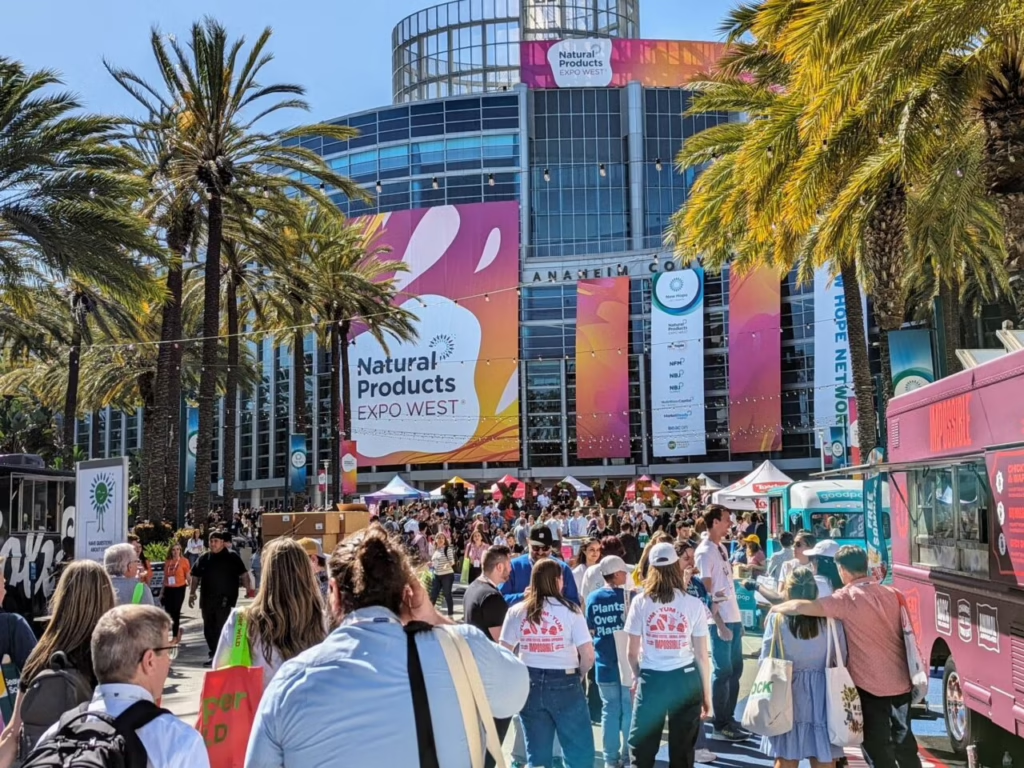
I’m writing this from the Natural Health Products Expo West in Anaheim 2026. But, if you walk the floor of any major natural products conference this year, one thing becomes clear very quickly. The supplement industry is not just growing, it is evolving at light speed! The ingredients are changing, the discovery channels are changing, and perhaps most importantly, the consumer mindset around supplements is changing for the better!
Supplements are no longer viewed as optional wellness products. Increasingly they are becoming foundational tools in how consumers think about managing their health. Recent industry surveys show that more than seventy percent of consumers now consider supplements essential or important to their daily routine. That is a meaningful shift. For many people supplements are no longer something you take occasionally when you feel run down. They are becoming part of a daily health strategy.
At the same time, the way people discover supplements has been transformed by social commerce. A growing percentage of consumers are encountering ingredients and products through platforms like TikTok and Instagram before they ever step into a store or visit a brand’s website. TikTok Shop alone is now one of the fastest growing retail channels for supplements, expanding at rates exceeding seventy percent year over year. But the influence of social media extends far beyond direct purchases. Much of the discovery, education, and even the normalization of certain ingredients now begins in the social media ecosystem.
That shift has changed the role of the influencer as well. We have moved from celebrity endorsements to something closer to peer to peer influence. Consumers are following creators who appear relatable, authentic, and often deeply invested in health optimization themselves. For younger consumers especially, social media is becoming one of the most trusted sources of health information. Whether that information is always accurate is another question entirely.
Trust remains one of the defining challenges in the supplement space. Consumers want better health outcomes but they are often overwhelmed by the number of products available. In fact, surveys suggest that roughly 65% of consumers say they feel more comfortable completing their personal income tax forms than choosing which supplements to take! That statistic tells you almost everything you need to know about the current state of the market.
As a result, signals of credibility have become increasingly important. Third party certifications, practitioner endorsements, transparent sourcing, and clinical research are all gaining weight in purchasing decisions. Consumers want to know not only that a supplement might work, but also that the brand behind it is credible and accountable.
Against that backdrop, several ingredient categories are emerging as particularly interesting right now. Healthy aging is arguably the most powerful trend in the industry. It is growing faster than almost any other health category and reflects a fundamental shift in how consumers think about longevity. Instead of simply trying to avoid disease later in life, people are becoming interested in extending what researchers call healthspan. The goal is to maintain energy, metabolic function, and cognitive resilience across the lifespan.
This is where some of the more novel ingredients entering the market become particularly interesting. Urolithin A is one of the most discussed compounds in the longevity space right now. Produced through the metabolism of polyphenols found in foods like pomegranate, urolithin A has been shown to activate mitophagy, the process by which cells recycle damaged mitochondria. Brands such as Timeline Nutrition have built entire product platforms around the concept of mitochondrial renewal.
Spermidine is another compound attracting attention. This naturally occurring polyamine appears to stimulate autophagy, the cellular recycling mechanism that helps remove damaged proteins and cellular components. Because autophagy is closely linked to aging biology, spermidine has quickly found a place in the emerging longevity supplement stack.
Ergothioneine is perhaps even more obscure but increasingly compelling. Found primarily in mushrooms, ergothioneine is a sulfur containing amino acid that accumulates in tissues exposed to high oxidative stress. The fact that humans have a dedicated transporter for ergothioneine suggests that it may function as a kind of protective micronutrient for mitochondrial health. Some researchers have even begun referring to it as a potential longevity vitamin.
Alongside longevity, gut health continues to anchor a large portion of the supplement market. Consumers are increasingly aware that many aspects of health, from immune function to mood to metabolic regulation, are influenced by the microbiome. That awareness is driving growth not only in probiotics but also in more advanced microbiome related ingredients.
Tributyrin is one example. Unlike traditional probiotics that attempt to modify the bacterial population of the gut, tributyrin delivers butyrate directly. Butyrate is a short chain fatty acid produced by beneficial bacteria that plays a critical role in maintaining intestinal barrier integrity and regulating immune signaling. Delivering butyrate in a stable form may offer a more direct way to support gut health.
Another emerging concept is the idea of inflammation resolution rather than simple inflammation suppression. Specialized pro resolving mediators, often referred to as SPMs, are lipid compounds derived from omega three fatty acids that help actively switch off inflammatory processes once they have served their purpose. This is a more nuanced approach to immune balance than traditional anti inflammatory strategies.
Another ingredient beginning to gain attention in the stress and resilience category is black seed oil standardized for its primary bioactive compound, thymoquinone, such as the ingredient ThymoQuin®. Traditionally used in Middle Eastern and Ayurvedic medicine, black seed oil has long been associated with immune and metabolic health, but newer research is beginning to highlight its potential role in stress physiology. Unlike classic adaptogens that primarily work by modulating the hypothalamic pituitary adrenal axis and helping regulate cortisol production, thymoquinone appears to work somewhat downstream of the stress response. Chronic stress activates inflammatory and oxidative pathways throughout the body, and thymoquinone has been shown in both preclinical and emerging human studies to reduce inflammatory signaling and oxidative stress markers associated with prolonged cortisol exposure. In this way, standardized thymoquinone extracts may help the body better manage the biological consequences of chronic stress rather than simply suppressing cortisol itself, offering an interesting complementary strategy to more traditional adaptogenic ingredients.
Metabolic health is also undergoing a major transformation driven by the popularity of GLP one medications. As millions of consumers adopt these drugs for weight management, a new category of companion supplements is beginning to emerge. These products aim to support metabolic flexibility, maintain muscle mass, and optimize nutrient intake while using GLP one therapies. Fiber supplements that support endogenous GLP one signaling are one example already appearing in the marketplace.
Stress and mood support represent another rapidly expanding area. Younger consumers in particular report high levels of stress and are increasingly turning to supplements for cognitive and emotional resilience. Adaptogenic herbs like ashwagandha remain popular, but the category is evolving to include ingredients that influence neuroendocrine signaling and inflammatory pathways associated with chronic stress.
What is particularly interesting about many of these ingredients is that they do not fit the traditional vitamin deficiency model of nutrition. Instead, they function more like signaling molecules that influence biological pathways. Mitochondrial renewal, autophagy, inflammatory resolution, and microbiome metabolism are all examples of systems level processes that are now being targeted by nutritional compounds.
At the same time, consumers are beginning to demand more objective ways of measuring whether these interventions are working. Wearables have introduced people to the idea of tracking health metrics, but the next phase appears to be shifting toward more sophisticated biometrics. Blood tests, urine testing, and saliva based diagnostics are becoming increasingly accessible, allowing individuals to monitor markers related to inflammation, metabolic health, hormone levels, and nutrient status.
This movement toward measurable health outcomes could fundamentally reshape the supplement industry. Instead of choosing products based purely on marketing claims, consumers may increasingly make decisions based on laboratory data and personalized biological insights. Husband™ is one great example of this type of direct to consumer test-at-home platform.
All of these forces are converging at once. Social commerce is changing how supplements are discovered. Longevity science is expanding the range of ingredients entering the market. And consumers are demanding more personalized and measurable approaches to health optimization.
The supplement industry has always been dynamic, but the pace of change today feels different. It is no longer just about selling vitamins. It is about helping consumers navigate an increasingly complex landscape of health information, biological data, and emerging nutritional science.